
 Classic Tour Packages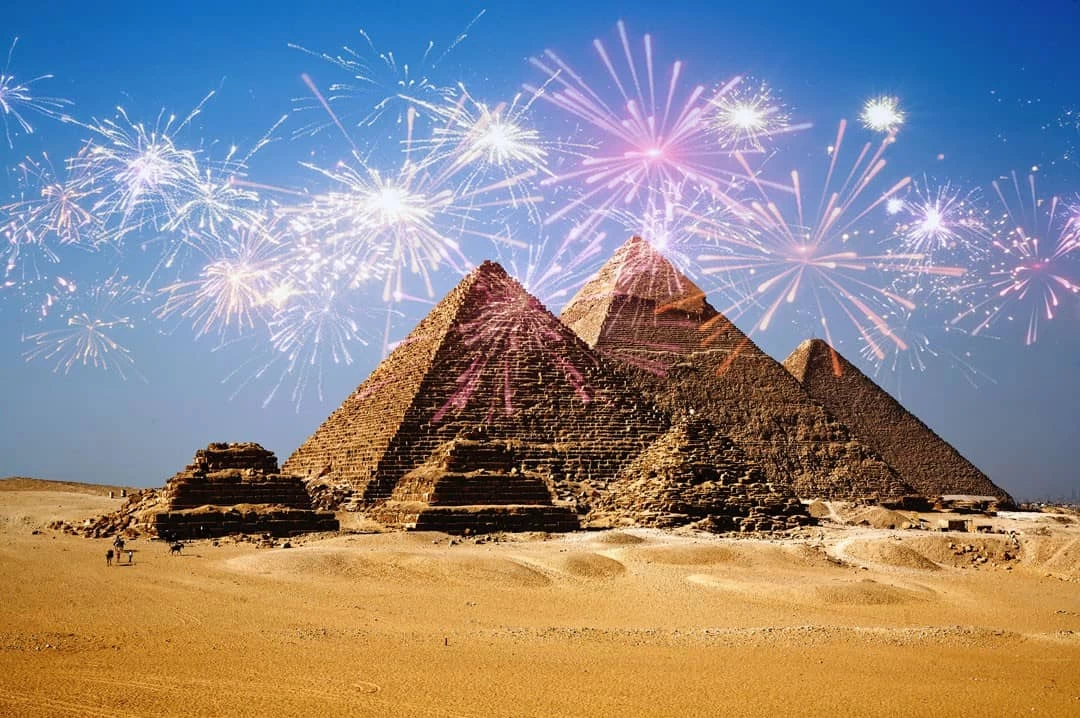
The history of the Giza Pyramids
Built by in ancient Egypt by order of Pharaoh Khufu during the 4th Dynasty of the Old Kingdom period. These were built from 2600 to 2500 BC. Each of these ancient monuments was built as the burial chamber of three powerful pharaohs – Khufu, Khafre and Menkaure. The largest and oldest among these, known as the Great Pyramid of Khufu, once rose to about 146.6 meters (481 feet) above sea level – the tallest human-built structure in the world for nearly 4,000 years. Ancient Egyptians were convinced that death wasn’t an end, but a beginning and believed they embarked on a journey to an everlasting realm.
For this purpose, the pharaohs were buried in tombs of immeasurable scale, replete with riches, gods, and precisely laid out chambers intended to ease their transition to the afterlife. Thousands of engineers, craftsmen, laborers, and workers over several decades meticulously crafted these impressive edifices. While myths and legends suggest the laborers were enslaved, modern scholars are confident they were paid workers. The Giza Pyramids Complex comprises burial complexes, temples, causeways, tombs of high-status individuals, and workers’ villages, all of which show the development and sophistication of Ancient Egyptian civilization.
Work on the site is still yielding its secrets, offering us new insights into Ancient Egypt, one of the world’s ancient civilizations.
The Architecture and Engineering of the Giza Pyramids
It is not so much the size of the pyramids at Giza that has puzzled engineers over the centuries, but their remarkably precise early construction. The Great Pyramid is made of more than 2.3 million stones, each weighing from 2.5 to 15 tons, and yet all fit seamlessly together. It is still unclear how the huge stones were quarrying, transported, and lifted with so much accuracy. The level of Ancient Egyptians’ mathematical, astronomic and engineering skills can be seen in the careful alignment of the pyramids with the four cardinal directions. The site consists of passageways, chambers, ventilation shafts and hidden rooms, and The Great Sphinx.. The Great Sphinx is a colossal limestone statue with the body of a lion and the head of a king, believed by many archaeologists to be modeled on the pharaoh Khafre, builder of the second-largest pyramid. The monument represents strength, wisdom, and regal authority and is one of Egypt’s most photographed structures.
The pyramids, along with temples and the Great Sphinx constitute one of the most impressive archaeological sites on Earth, and have rightly been given a World Heritage Site status by UNESCO.
New research, using muon particles (which pass through stone, but are detected and quantified), laser scanning, and satellite imagery has confirmed new void spaces inside the Great Pyramid.
Best Time to Visit the Giza Pyramids
If you’re planning a visit to Giza, your itinerary will be significantly better planned during one of the milder months from October through April. This period typically has cool temperatures ideal for exploration. Moreover, many tourists choose to avoid these times due to excessive temperatures exceeding 40C (104F). Visiting the Pyramids in the early morning is generally a good idea as it avoids peak crowds, ensures pleasant temperature for sightseeing, and presents you with unique golden hour lighting perfect for photography. Many visitors flock to the site during the evening to witness breathtaking sunset vistas of the pyramids. The Giza Pyramids Complex has different ticket packages which give general admission to the Giza Plateau and also provide entrance to the inside of a selected pyramid.
Taking a guided tour of the pyramids can bring your Giza visit to life as they help explain the history and structure of the monuments in a concise manner. Camel rides and horse riding are also available around designated parts of the site to help you explore the surrounding desert. You can combine your Giza exploration with visits to nearby destinations like the Grand Egyptian Museum, Memphis, and Saqqara.
Tips for Visiting the Giza Pyramids
Prepare accordingly, dressing in light and breathable clothing, sturdy walking shoes, sunglasses, a broad-brimmed hat, and using plenty of sun protection.
Bringing a considerable amount of water, particularly for visits in warmer seasons, is a must. For the most authentic and informative experience, acquire your tickets from official ticket booths and hire an official guide. It’s important to beware of unregulated vendors who may offer unlicensed tours.
Carry small amounts of Egyptian currency for tips or small purchases.
Photographers often frequent the panoramic viewpoint to take photographs of all three pyramids from a single location. Evenings come alive at the Giza Pyramids during the famous Sound and Light Show, which utilizes the monuments as a backdrop to a narrative of their history, accompanied by special effects and music. Do not climb or touch the pyramid’s stones and take care not to leave any garbage behind. These are world monuments of immense value, which have survived for thousands of years and require protection for future generations.
What continues to hold sway over tourists, both at home and from the farthest corners of the world, the Great Pyramids of Giza. For a multitude of reasons: engineering, history, and mystery.
 Our FAQ